LinkPrint® 3D · Designed for 2027Concept design
3D print anything.
Photograph a broken part. Upload a sixty-year-old blueprint. Hand over your daughter’s drawing. LinkPrint® 3D is designed to turn any of them into a precise 3D model with AI, make it in the right material, from full-color resin to metal powder, color it by machine and deliver it to your door.
Start from
- A photoof the part that broke
- A drawingeven one sixty years old
- A sketchby any hand, at any age
- A sentencedescribing what you need
- A scanmade with your phone
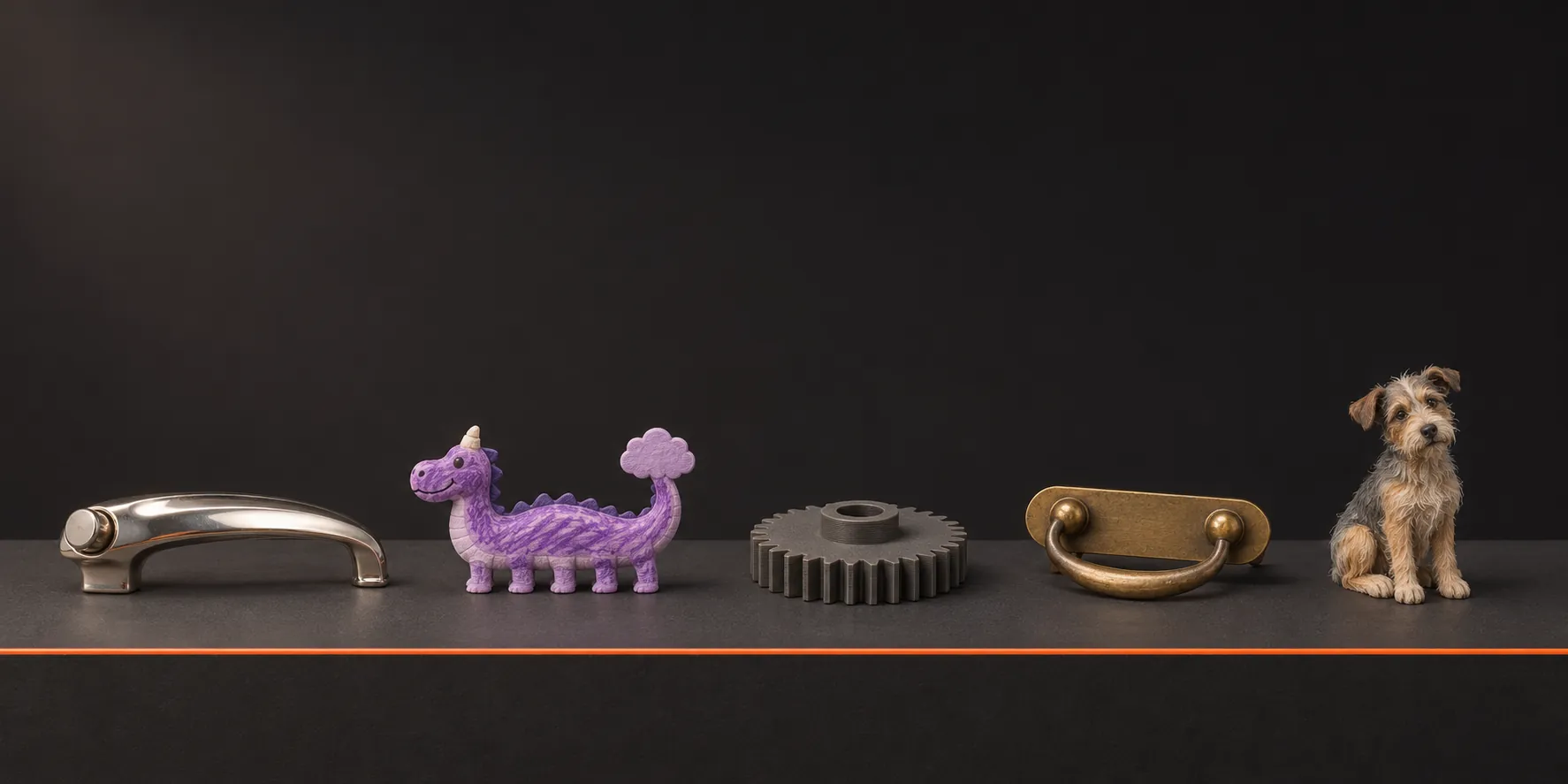
Three stories
A photo, a drawing, a sketch. Three ways in, one finished object.
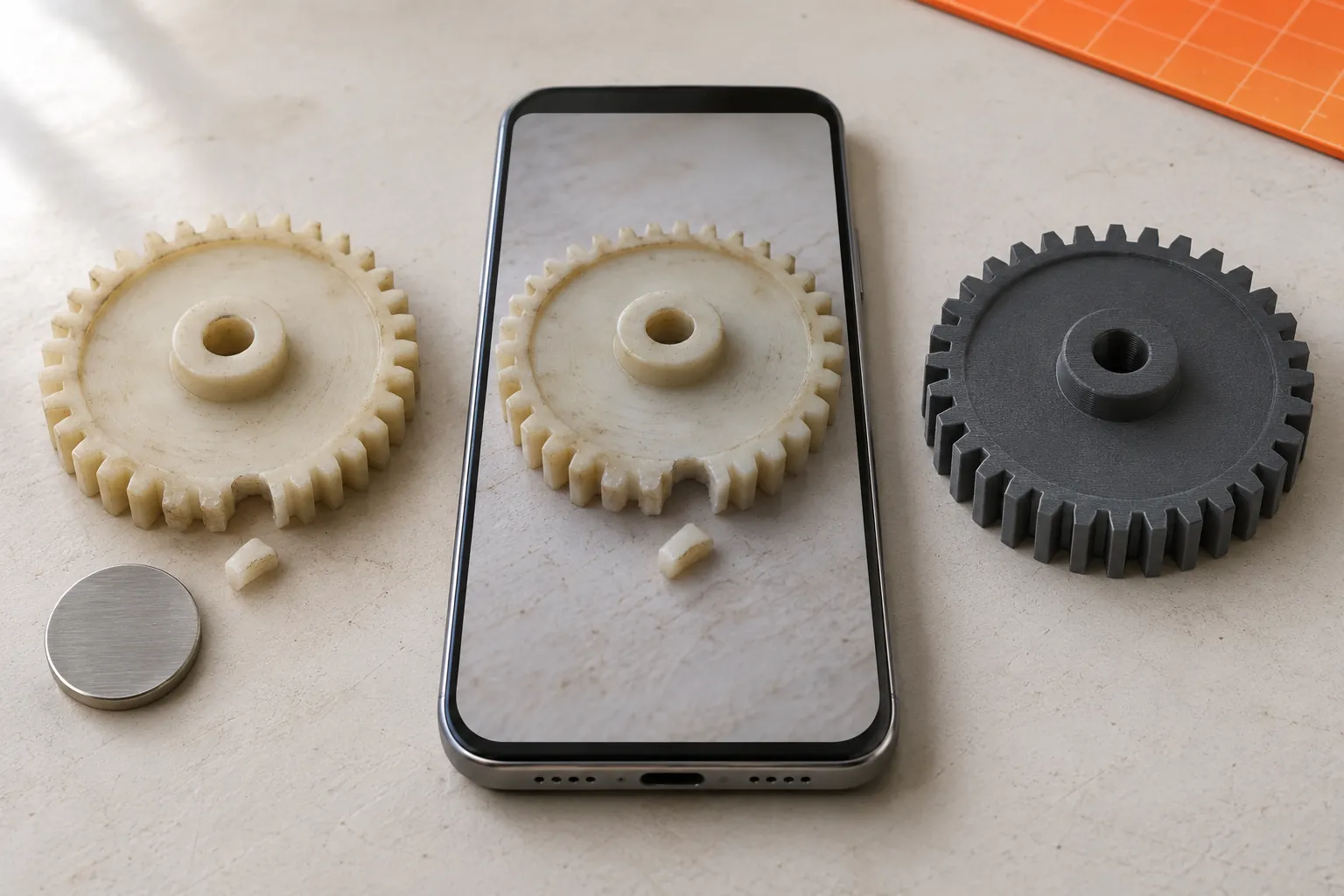
Repair · From a photo
The part that broke, made again from a photo.
The drive gear in a twenty-year-old stand mixer loses a tooth, and the maker stopped selling parts long ago. Three photos and the exact diameter and thickness are enough. AI recognizes the part, counts the teeth, works out the tooth profile from the dimensions you gave, rebuilds the broken one from the intact side, and suggests a tougher material than the original.
- Input
- Three phone photos, plus the diameter and thickness
- AI
- Identifies and measures the part, restores the missing tooth
- Made in
- Glass-filled nylon
- Finish
- Arrives ready to fit
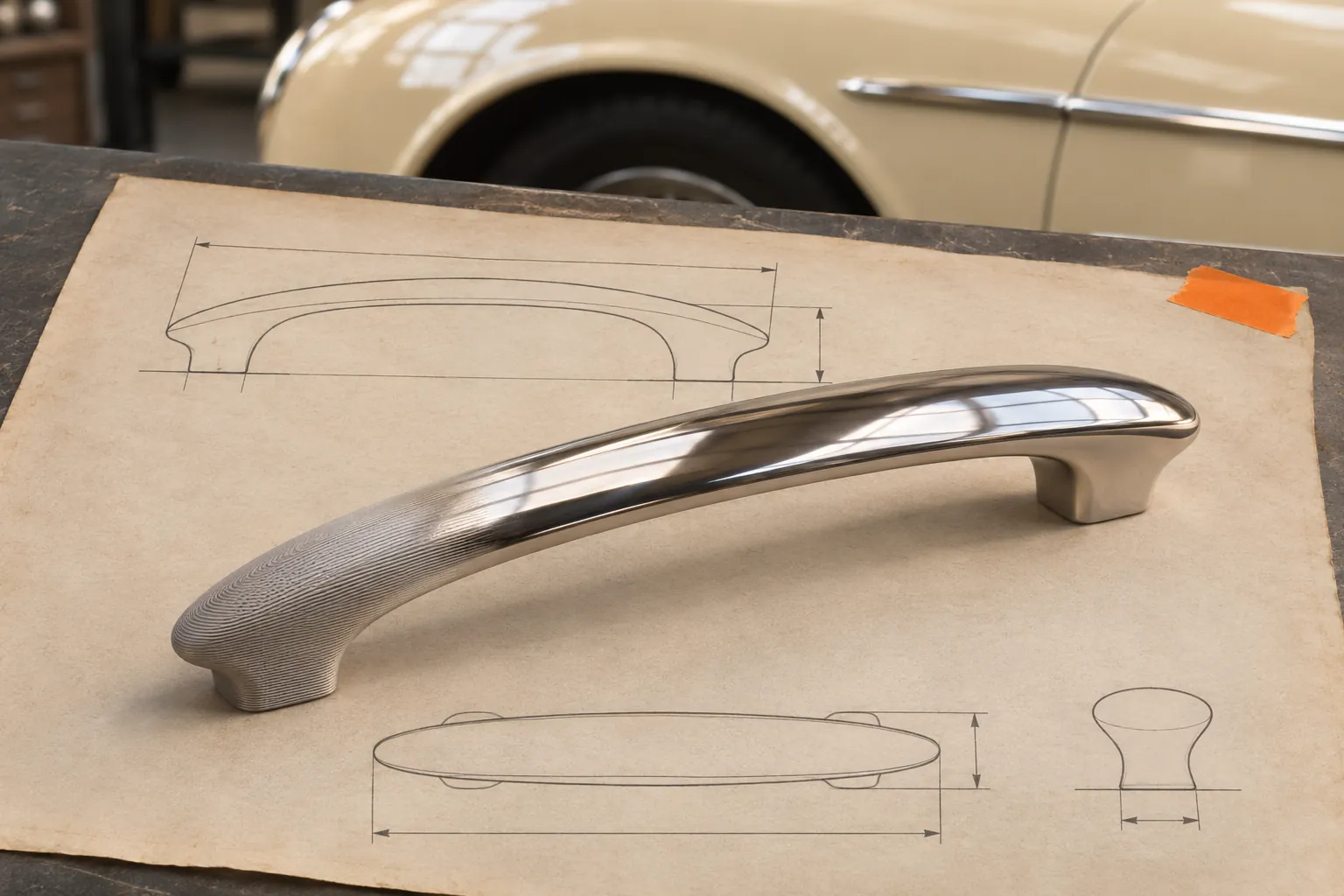
Restoration · From a drawing
A 1960 roadster, and a part no one has made in sixty years.
The owner of a 1960 German roadster needs a new door handle. None has been made for decades, but the original factory drawing survives online as a scan. AI reads it: the views, the sections, the dimensions and the tolerances written to the standards of the day, and it asks wherever the scan is unreadable. Then a laser melts stainless-steel powder in layers thinner than a human hair, and the handle is heat-treated, polished and inspected against the drawing.
As early as 2018, some carmakers’ classic-car departments began remaking discontinued parts with 3D printing, though at the time engineers had to model each part one by one. LinkPrint® 3D is designed to hand the modeling to AI, so every owner can have it.
- Input
- A scanned factory drawing
- AI
- Reads views, sections, dimensions and tolerances
- Made in
- Stainless steel, laser powder bed fusion
- Finish
- Heat treatment, polishing, inspection report
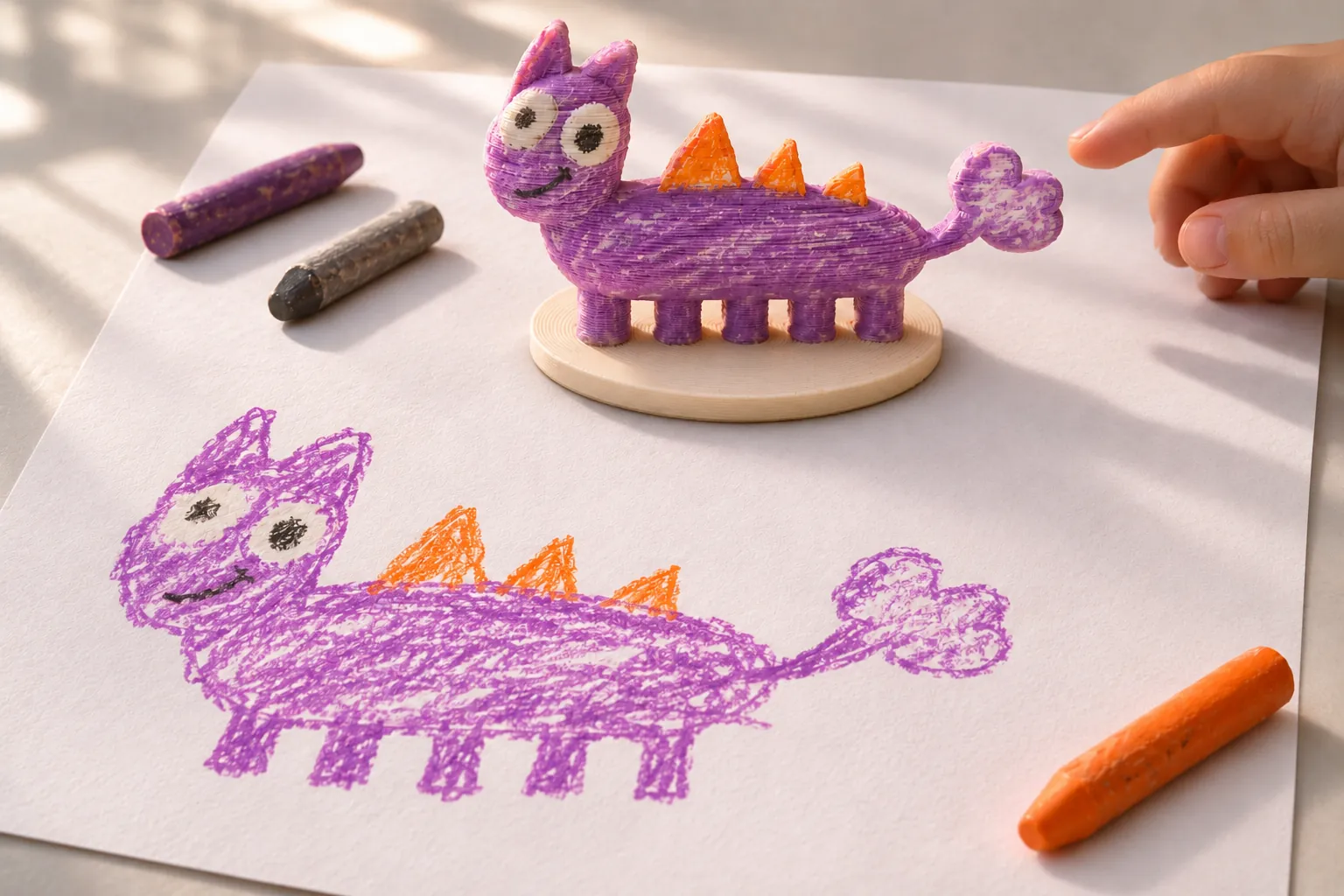
Family · From a sketch
The drawing on the fridge, standing on the shelf.
Your six-year-old draws a purple dragon with five legs and a cloud for a tail. AI keeps every wobble of the crayon line, imagines the side nobody drew, gives the dragon a base it can stand on, and makes sure no leg is too thin to survive a hug. It is printed in full color, with the crayon texture in its surface.
- Input
- A photo of the drawing
- AI
- Turns 2D into 3D, keeps the hand-drawn character, checks strength
- Made in
- Full-color resin
- Finish
- Color printed in, no painting
And everything else
If you can show it, we can make it.
Your favorite character, in your pose
Choose a character, a pose and a scale, and receive an official figure made under license from the rights holder. Or bring a character you invented yourself, from a few sketches.
A pet, remembered
From the everyday photos already on your phone, AI rebuilds the dog who slept by the door, down to the crooked ear. Printed in full color, or cast in bronze from a printed pattern.
The fourth drawer pull
One of four brass pulls on a dresser from the 1890s went missing. AI models the fourth from photos of the other three; it is cast in brass from a printed wax pattern and aged to match.
The machine no one makes parts for
A printing press from the 1980s stops for a gear whose maker closed long ago. The factory sends photos and a page of the old manual; the gear is printed in metal and the line runs again.
Made from a sentence
“A hook that holds two bikes on a 40 mm rail and folds flat.” AI designs it, checks that it carries the load, shows it at full size through your phone, and prints it once you approve.
Shaped to your hand
A phone scan of a hand or an ear becomes a tool grip, a controller grip or earbud tips that fit only you.
How it works
From a photo to a finished part, in six steps.
Every step that once needed a CAD designer, a print technician and a painter is designed to be done by AI and machines, with people approving what matters.
-
01
Capture
A few photos plus the exact diameter and thickness, a scanned drawing, a sketch, a sentence or a phone scan. AI works out every other dimension.
-
02
Understand
AI identifies the object, what it does and what it is made of, reads every dimension, and reconstructs what is broken or missing.
-
03
Model
It builds a model fit for manufacturing: a parametric CAD part with real tolerances, or a sculpted figure in full color. Changes are asked for in plain words.
-
04
Prove
Strength, heat and fit are tested in simulation, and the print is planned. You see the model at full size through your phone; an engineer signs off every functional part.
-
05
Print
LinkPrint® Hub sends the job to the machine that suits it: full-color jetting, resin, engineering polymer or metal powder bed fusion, in our workshop or at a partner factory.
-
06
Color and finish
Color goes on by machine, not by hand. Supports come off, metal is heat-treated and machined, and every piece is inspected against its model before it ships.
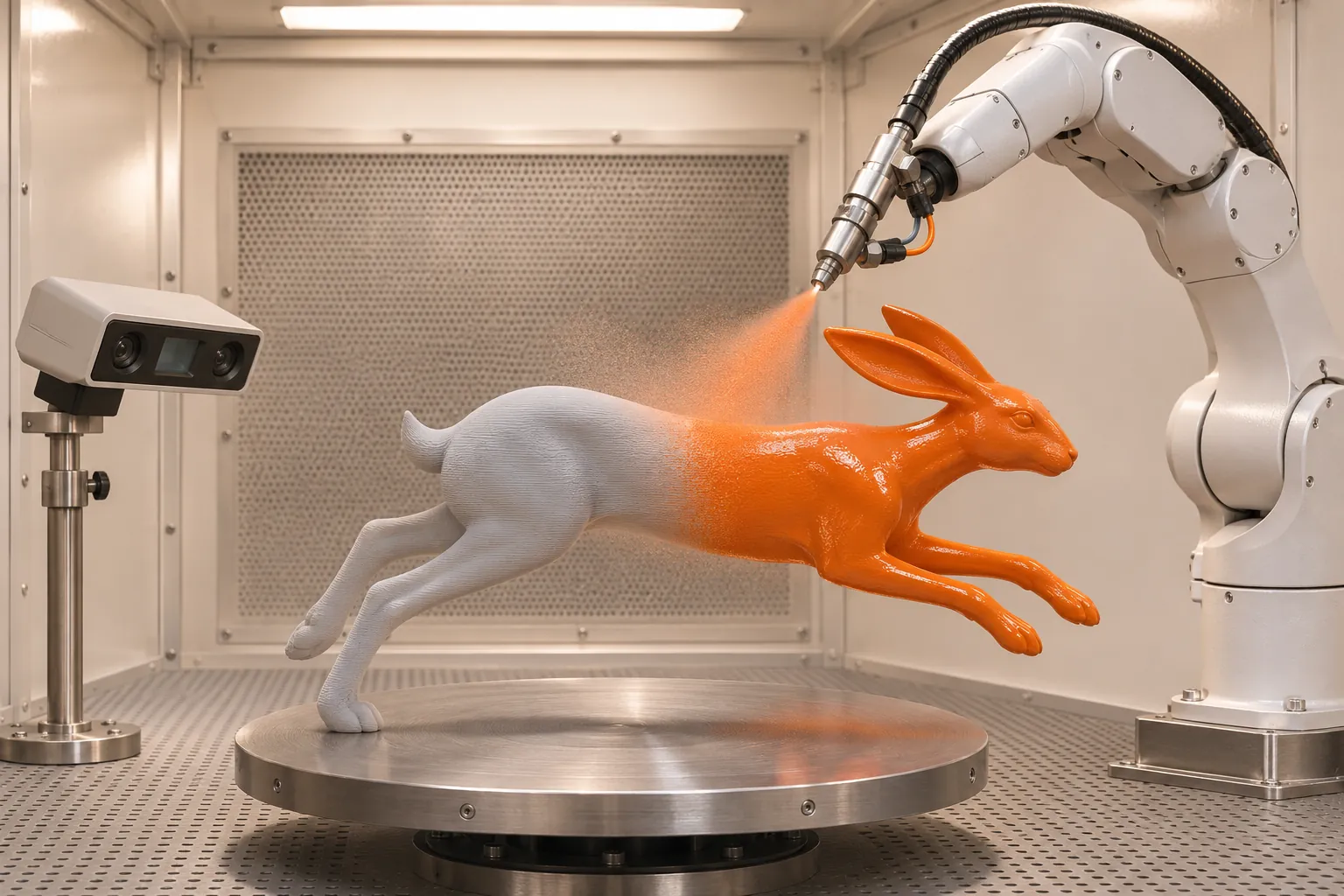
Color
Color, without a paintbrush.
Painting a 3D print by hand has been the slowest and least repeatable step. Machines now do it in four ways, and the AI in LinkPrint® 3D chooses the right one for each object.
The choice follows the object. A dragon drawn in crayon is printed in color. A trim piece for a classic car is sprayed in its original paint. A batch of nylon clips is dyed. A helmet shell gets its graphics by inkjet.
Printed in color
Full-color printers jet cyan, magenta, yellow, black, white and clear resin drop by drop, so the color is part of the material. Best for figures, drawings and keepsakes.
Sprayed by a robot
A robot scans a part it has never seen, works out its own spray path, then primes, paints and clear-coats it to a color sample or a paint code. Best for larger parts and automotive finishes.
Inkjet on a robot arm
Industrial printheads ride on six-axis robots and print graphics and patterns directly onto curved surfaces, such as a helmet shell or a body panel.
Dyed through
Nylon parts are dyed in automated baths, so the color goes into the surface and does not chip off. Best for functional parts in quantity.
Why now
AI’s 3D skills and the machines’ own abilities are growing stronger together.
We are building LinkPrint® 3D because both halves of the problem are being solved at once. Each year AI understands objects more precisely, and machines make, color and finish them with less help from people. We expect the two to meet by 2027.
AI that understands objects
- 2026One photo becomes a printable 3D model in minutes, ready for the slicer.
- 2026AI reads scanned engineering drawings and builds editable CAD models, feature by feature.
- 2026Cameras and AI watch a print layer by layer and stop it when something goes wrong.
- 2027targetFrom a few photos or a scanned drawing to a toleranced, simulated part, in one conversation.
Machines that make, color and finish
- 2025Inkjet printheads move onto six-axis robots and print directly onto curved parts.
- 2026Printers that jet millions of colors reach the desktop. The color is printed in, not painted on.
- 2026Spray robots scan a part they have never seen, plan their own path and paint it, with no programming.
- 2026Metal powder-bed printers arrive at a fraction of their former price.
- 2027targetPrinting, color and finishing run as one automated line.
Years mark when a capability was on sale or publicly shown, by companies across the industry. Entries marked as a target are our expectations for 2027.
Materials
From color resin to metal powder.
AI picks the process and the material from what each object has to do: be held, carry a load, stand heat, or simply look right.
Processes: full-color material jetting, resin printing, polymer powder bed fusion, filament printing, laser powder bed fusion and binder jetting for metal, and investment casting from printed patterns.
Polymers
- PLA
- PETG
- ASA
- TPU
- Nylon PA12
- Glass-filled nylon
- Carbon-fiber nylon
- PEEK
- PEI
Resins
- Standard
- Tough
- Flexible
- High-temperature
- Castable
- Full-color
Metals
- Stainless steel 316L
- 17-4 PH stainless steel
- Aluminum AlSi10Mg
- Titanium Ti-6Al-4V
- Nickel alloy 718
- Copper
- Tool steel
- Brass and bronze, cast from printed patterns
Finishes
- Robotic spray paint
- Full-color printing
- Dyeing
- Vapor smoothing
- Clear coat
- Polishing
- CNC machining
- Heat treatment
- Plating
Boundaries
Anything, within clear limits.
A service that can make almost anything has to be clear about what it will not make. Every request is screened by AI, and by a person whenever the answer is not clear-cut.
No weapons
No firearms, no firearm parts, and nothing designed to injure.
Safety parts need sign-off
Parts that brake, steer, or carry loads that could hurt someone if they fail are made only to an engineer-approved specification, or not at all.
Rights respected
Characters, logos and protected designs are made only under license from their owners, or when they are yours. No counterfeit branded parts.
Your model is yours
The photos, drawings and models behind your order are kept for your order. Download your model, or keep it on file for the next time.
Built on the line
Not a new company. A new use of the line we run.
- OpenEcomWhere a customer uploads, talks to the AI, approves the model and orders.
- LinkPrint® HubSends each job to the machine and the factory that suit it, and keeps one record from photo to delivery.
- LinkPrint® AIStarts from image-to-3D conversion and extends it to drawings, words and scans, to engineering models and simulation.
- Factory systemWork orders, scanning and inspection follow the practice of our photoX® factory.
- Flagship storeThe glass workshop makes small and full-color pieces where customers can watch, and the design desk is where people bring the things that broke.
The path to 2027Concept design
Start where the risk is lowest, end in metal.
- Stage 1Figures and keepsakes: drawings, characters and pets, printed in full color in the flagship workshop and at partner factories.
- Stage 2Parts from photos: replacement parts in engineering polymers, checked at full size on the customer’s phone and finished in color by machine.
- 2027Metal and drawings: blueprints read by AI, parts made by laser powder bed fusion at partner factories, signed off by engineers and delivered with an inspection report.
LinkPrint® 3D is in concept design. This page describes the service we are designing for the AI and printing capabilities we expect by 2027. Scenarios, materials, processes and stages are design targets, not commitments or a description of a service available today. Images are AI-assisted concept renderings.
The thing you thought was gone for good can be made again.
LinkPrint® 3D will start in the flagship workshop. Tell us what you would bring first.